

Bareiss hardness tester for composite materials (car interior)
- 12 months warranty limited
- Display: 0,01mm
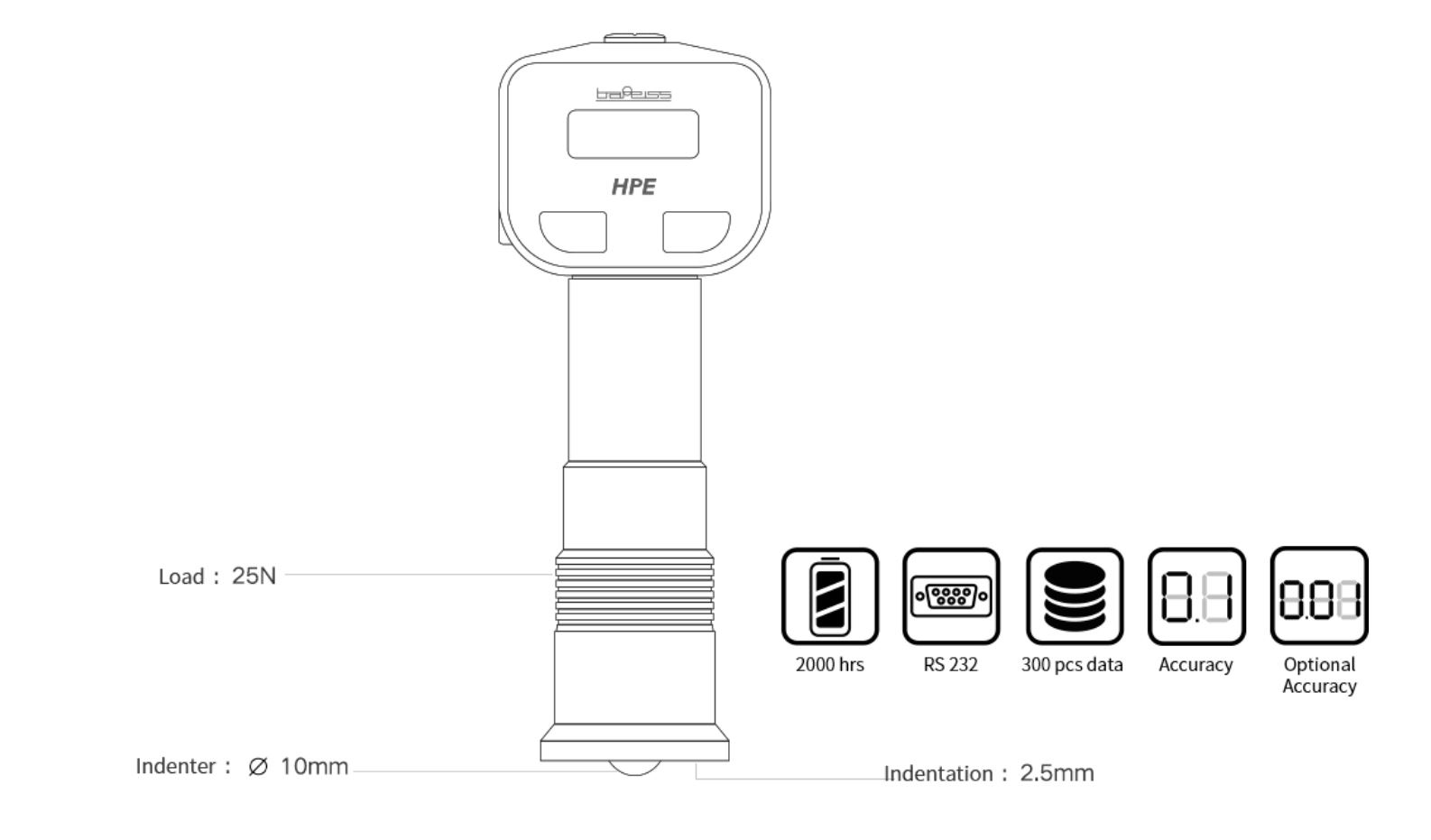
- Sphere shaped indenter Ø 10 mm
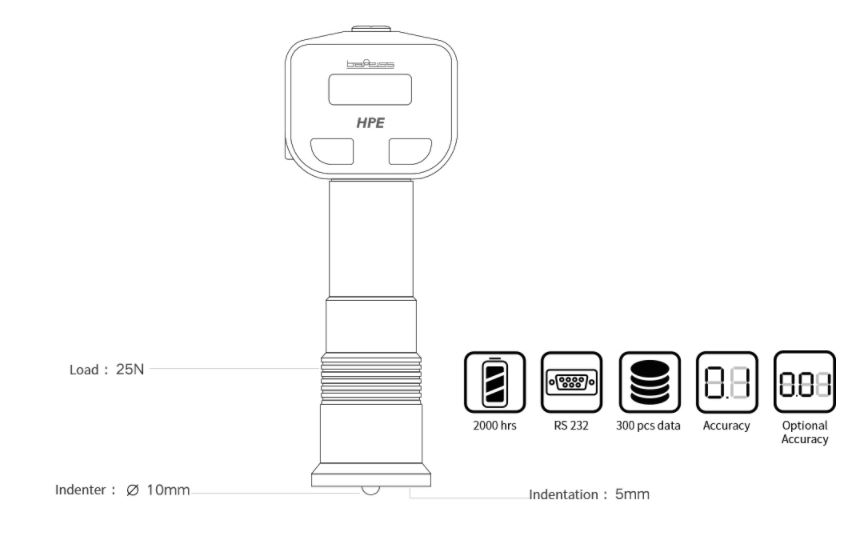
- Sphere shaped indenter Ø 15 mm
Bareiss hardness tester for composite materials (car interior) for Application-Based Model Selection
This range is suited for intended for comparing closely related models before choosing a final configuration. It is especially useful for routine testing, inspection, and quality-control workflows, where the right choice often depends on differences in configuration, range, portability, and application fit.
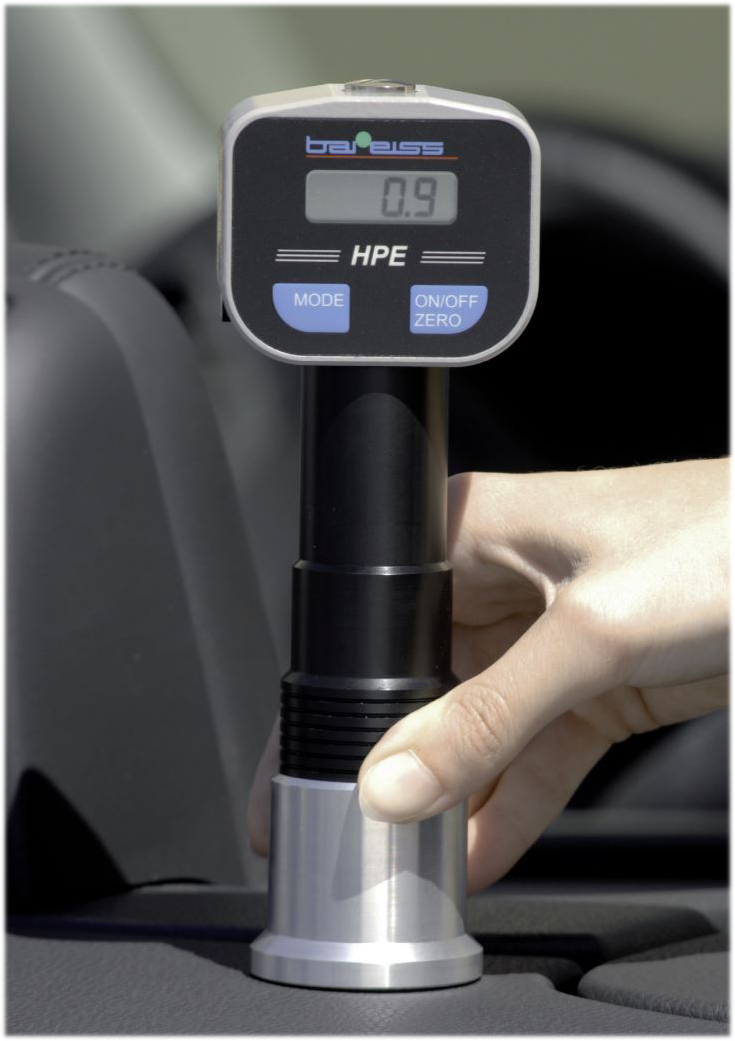
The composite material typically contains foam, and other materials may contain metals, plastics, leather, or wood to increase structural strength. It is most suitable for use in automobile interior such as seat, armrest, headrest, inner door plate to do hardness test.
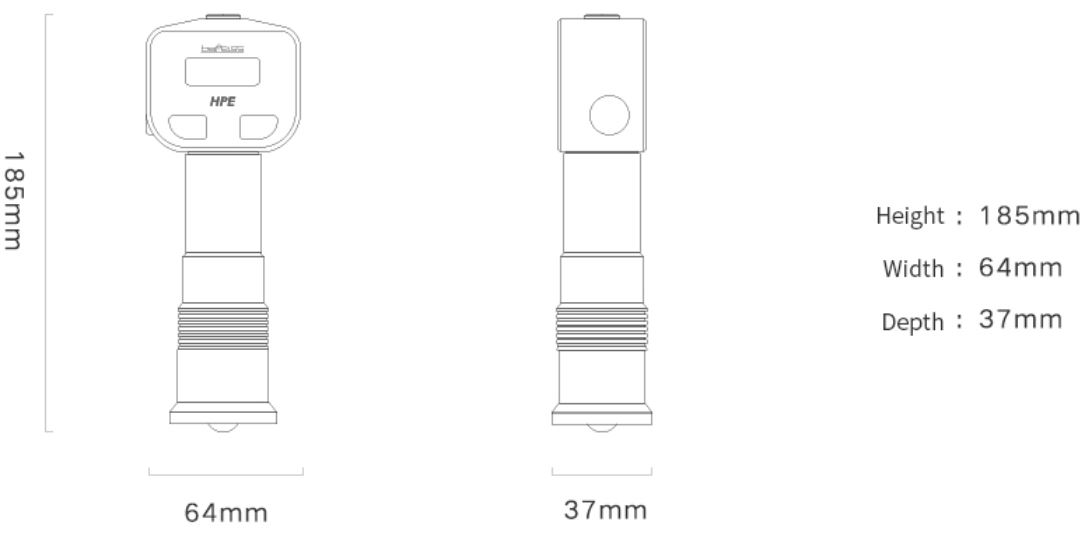
Bareiss hardness tester for composites - Size and Weight
Method Ø 15mm
QUICK TIP:
Measuring principle
The indenter of the instrument penetrates the specimen from the surface. This indentation depth is recorded and interpreted in the unit of Newton.
Related Products
For complementary material testing solutions, check out the Elcometer 311 Automotive Paint Meter for coating thickness measurement, the Road and Ambient Temperature Monitoring System for environmental data logging, or explore other Galdabini machines here for advanced mechanical testing needs.
Have a larger-scale project? Discover our Galdabini Testing Machines:
Product Q&A
What is the Bareiss HPE II KFZ designed for?
It is developed for hardness testing of composite materials that combine two or more material groups, commonly found in automotive interiors such as seats, armrests, headrests, and inner door panels.
Which materials can it test?
The HPE II KFZ can test composites containing foam, metals, plastics, leather, or wood, making it versatile for layered or reinforced materials.
What is the measurement principle?
The tester uses an indenter that penetrates the specimen surface, and the depth of indentation is measured in Newtons to determine hardness.
What are the available test methods?
Methods include Ø 15 mm and Ø 10 mm indenters, which allow for flexible testing depending on sample size and structure.
How easy is it to use in industrial applications?
The HPE II KFZ is compact, ergonomic, and suitable for on-site testing in automotive manufacturing and material research labs.
Does it support large-scale projects?
For more extensive material testing requirements, integration with other systems like Galdabini testing machines is recommended.
What kinds of users typically benefit from this product line?
Mostly organizations involved in rubber, elastomer, plastics, coatings, and metal quality control, where buyers need to compare scale type, probe configuration, load method, and portability across related models.
Method Ø 10mm
| Memory | for 300 measured values |
| Battery duration | approx. 2000 hours |
| Battery | Lithium battery 3.6V with approx. 2000 hours operating time |
| Data output | RS 232 |
| Measurement LxWxH | 190 x 70 x 40 mm |
| Weight | 600 g |
Product Models
| Product | Price | ||
|---|---|---|---|

|
Bareiss hardness tester for composite materials (car interior) - HPE II-KFZ - Ø 15 mm |
$USD 5,773.50
|
|
|
|
Bareiss hardness tester for composite materials (car interior) - HPE II-KFZ - Ø 10 mm |
$USD 5,885.50
|
|
Need larger scale equipment for a bigger project?
Our parent site geneq.com works by quote requests, so we can offer a unique price per any combination of items you choose, and the best shipping company/route for weighty items. We distribute the biggest names in the industry since 1972!


